My next P&P variation, A Very Darcy Christmas, will be available on Amazon this Sunday, November 27th. You can pre-order it now at Amazon, Barnes and Noble, Smashwords, iTunes, Kobo, and elsewhere.

My next P&P variation, A Very Darcy Christmas, will be available on Amazon this Sunday, November 27th. You can pre-order it now at Amazon, Barnes and Noble, Smashwords, iTunes, Kobo, and elsewhere.
Visit JustJane1813 to see the cover for my new Pride and Prejudice Christmas story, A Very Darcy Christmas! You can also see a blurb that will give you an idea of the plot and enter a Giveaway for an ebook.

I wasn’t quite sure what to expect from my first Jane Austen Society of North America (JASNA) Annual General Meeting (AGM). Many other JAFF authors had attended past AGMs and seemed to enjoy them, but I wasn’t sure what I would find at my first AGM in Washington DC.
I learned a couple things. One is that the AGM is huge: more than 850 attendees! I knew Austen had a lot of fans, but wow! Another was that the conference itself was a very fun hybrid of the Modern Language Association Conference and Comic Con. Where else could you find women attending lectures on class and gender in Emma while wearing full 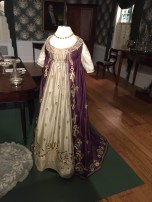 Regency regalia?
AGM panels during the day have quite an academic bent, examining aspects of Austen’s works through literary and historical lenses. I particularly enjoyed one that explored how Emma uses humor as a strategy as a woman in a male-dominated world. It got me thinking about how humor functions in many of Austen’s other novels.
AGM attendees also had the opportunity to enjoy tours of Washington, DC, Mount Vernon, or Annapolis as well as special exhibits at the Folger Shakespeare Library (about Shakespeare and Austen) and the DAR museum (about Regency fashion). There were also musical performances and a theatrical production of Sense and Sensibility. An emporium during the day sold Austen related books, gifts, teas, and other items, as well as offering 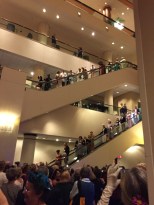 Regency costume rentals.
The highlight of the conference, however, was Saturday night—starting with an elegant and delicious dinner. This was followed by a promenade around the many levels of the hotel, which gave attendees an opportunity to show off their beautiful Regency garb. You haven’t lived until you’ve seen two levels of escalators covered in people wearing 1800s fashions. There were some truly spectacular dresses! I was quite envious. J After the promenade there was an evening of Regency dancing. A wonderful woman directed the myriad dancers at a speed slow enough that novices could participate. Everyone looked just beautiful!
With all of that to enjoy, however, I have to say that my favorite thing about JASNA was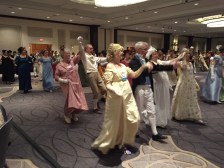 the camaraderie. I had a chance to meet two of my Facebook buddies whom I had never seen face-to-face before—and made new friends as well. Where else can you go to find people who get just as excited about Austen as you do? Or who are equally knowledgeable? Total strangers are interested in debating why a character did something or how the settings from two different books compare. Perhaps your household is different, but my family tends to start rolling their eyes after too much Austen talk. J There’s no such thing at JASNA.
If you have an opportunity to attend an AGM, I would encourage you to consider it—even if you don’t know anyone who is attending. You can go for the lectures, the exhibits, the costumes, the shopping, the dancing, or the friendships you might make. But the best reason of all to attend is because Jane Austen fans are your tribe!
This blog doesn’t have anything to do with Jane Austen, except to say that I believe she would have been a firm supporter of women’s right to vote and would have exercised that right if she had had it. Instead, this blog is about another amazing woman: Susan B. Anthony.
The women’s suffrage movement was born out of a meeting at a church in Seneca Falls New York in 1848. The Nineteenth Amendment, giving women the right to vote was passed 72 years later in 1920. So, in 2020, women will have had the right to vote for one hundred years.
A while ago I learned of an incident in the life of Susan B. Anthony in which she was arrested for casting a vote in an election. Before becoming a novelist I was a playwright, and I thought this would make a good subject for a play—which it did. It actually won a couple of awards. J
In writing the play I discovered it was not hard to convince my audience that women should have the right to vote. However, it was hard for audience members to understand why suffragists like Susan B. Anthony had such a great struggle.
There were many issues discussed at the convention, but suffrage was not the primary one. In fact, many of the attendees thought women’s suffrage was too unattainable and too controversial. Instead, one of their primary concerns was the rights of married women to keep their property. At the time when a woman married, all of her property became her husband’s—her money, her land, her clothing, her children. One suffrage speaker used to give the example of a woman who tried to sue her dentist for doing a bad job with her false teeth. The court ruled that she couldn’t sue the dentist because she had no standing—her teeth belonged to her husband.
Despite this political climate, the cause of women’s suffrage was officially taken up by Susan B. Anthony and Elizabeth Cady Stanton in 1866. They traveled around the country giving speeches and trying to persuade male congressmen to put forth an amendment. But the idea of women’s suffrage wasn’t gaining traction.
In 1872 Susan B. Anthony tried a new tactic. Claiming that there was no law specifically against women voting, she registered to vote in Rochester NY. The Rochester Union and Advertiser editorialized: “Citizenship no more carries the right to vote that it carries the power to fly to the moon…If these women in the Eighth Ward offer to vote, they should be challenged, and if they take the oaths and the Inspectors receive and deposit their ballots, they should all be prosecuted to the full extent of the law.”
Along with thirteen other women, Anthony cast her vote in the election of that year. She voted for Ulysses S. Grant for president. Anthony wrote to Stanton: “Well I have gone & done it!!–positively voted the Republican ticket–strait this a.m. at 7 O’clock. So we are in for a fine agitation in Rochester on the question.”
She was right. Her actions put the authorities in a quandary. Anthony was a well-born, educated woman—and quite famous by then; they did not want to risk the negative publicity of putting her in jail. However, they did not want to encourage other women to vote. So they finally did arrest her.
This is Anthony’s description of the arresting officer arriving at her house: “He sat down. He said it was pleasant weather. He hemmed and hawed and finally said Commissioner Storrs wanted to see me….”what for?” I asked. “To arrest you.” said he. “Is that the way you arrest men?” “No.” Then I demanded that I should be arrested properly.” According to another account, Anthony at this point held out her wrists and demanded to be handcuffed.
I can just imagine the arresting officer being sheepish and apologetic about having to arrest a well-dressed 52-year-old woman who represented no immediate danger to anyone. Anthony didn’t make it easier for him. In fact, I think she enjoyed his discomfiture.
She was tried in Canandaigua NY with a jury—in her words– “not of her peers” since women could not serve on juries. Her lawyer, John Selden, called Anthony as a witness, but the district attorney objected: “She is not a competent as a witness on her own behalf” because she was a woman. The judge did not allow her to testify.
Selden defended her with the assertion that she believed the fourteenth amendment “legally entitled her to vote,” and that she “voted in good faith in the belief that it was her right, she was guilty of no crime.” He asserted: “If the same act had been done by her brother…the act would have been not only innocent, but honorable and laudable. I believe this is the first instance in which a woman has been arraigned in a criminal court merely on account of her sex.”
After the district attorney rested his case, the judge drew a paper from his pocket and read an opinion that he had prepared before the trial started—and directed the jury to find a verdict of guilty. Not a single member of the jury uttered a word during the whole trial; but, their verdict might have led to a different outcome.
Anthony then made a speech, although the judge told her to sit down about a dozen times. She said, “When I was brought before your honor for trial, I hoped for a broad and liberal interpretation of the Constitution–that should declare…equality of rights the national guarantee to all persons born or naturalized in the United States. But failing to get this justice–failing, even, to get a trial by a jury not of my peers–I ask not leniency at your hands, but rather the full rigors of the law.”
So, she asked him—since she had been found guilty—to put her in jail. The judge ordered a fine of $100 and when Anthony announced that she would not pay one penny, the judge said: “Madam, the Court will not order you committed until the fine is paid.” So, he basically said they would put her in jail if she paid the fine. It doesn’t make any sense – although it does show how badly they didn’t want to make her a martyr for the cause. So, Anthony was free to go.
The trial was covered by all of the national newspapers and helped win sympathy for her cause. Anthony continued to campaign for women’s suffrage until her death in 1906, 14 years before women won the right to vote.
I was not prepared for the profound effect writing the play had on my own thinking. In history class we learn about the American Revolution and the founding fathers who sacrificed for our voting rights. But I realized that women have an additional and separate layer of the struggle for voting rights—as well as people who sacrificed for us. We have people like Susan B. Anthony who was willing to go to jail for our right to vote. Many later suffragists were arrested and jailed—even harassed and beaten by the police.
Women in Switzerland didn’t win the right to vote until 1971. And there are plenty of countries today where women cannot vote. We cannot take the right for granted.
After writing the play I resolved that I would vote in every election—even the small, seemingly insignificant municipal elections. Because I only have that right because women who came before me sacrificed for it. And because it’s my way of honoring the legacy of Susan B. Anthony and other suffragists like her.
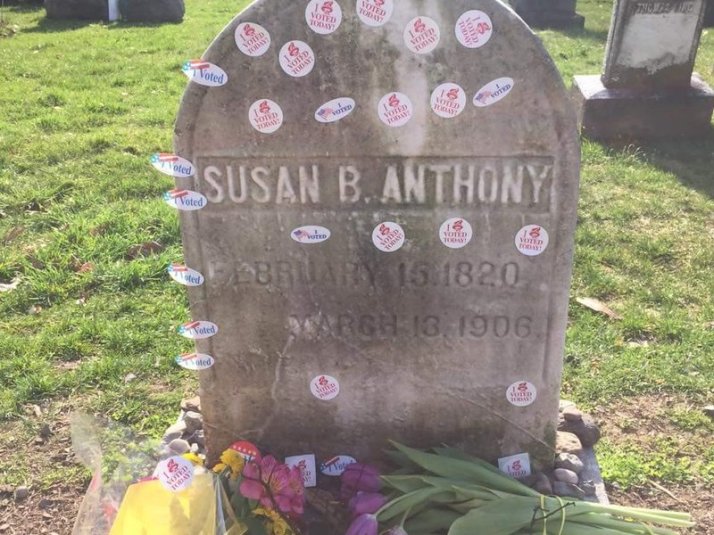
Today it is the custom for women to put their “I voted” stickers on Anthony’s tombstone in Rochester. It is because of her we can vote.
Chaos Comes to Longbourn received 4.5 out of 5 stars from Austenesque Reviews. In her review, Meredith wrote, “Chaos Comes to Longbourn is a deliciously wicked romantic romp that will have readers chortling in delight and quickly turning the pages! Definitely a perfect choice for readers in search of an amusing and unique variation to captivate their attention!”
Over the weekend I attended the Jane Austen Society of North America’s Annual General Meeting. It was a blast! Below are photos from the most photogenic parts: the Promenade (which included many people in Regency garb on escalators) and the Regency Dancing after dinner.


I will be at the JASNA Annual General Meeting Tomorrow and Saturday. Really looking forward to it! I’d love to meet any friends who are there! Let me know you are going and/or introduce yourself.

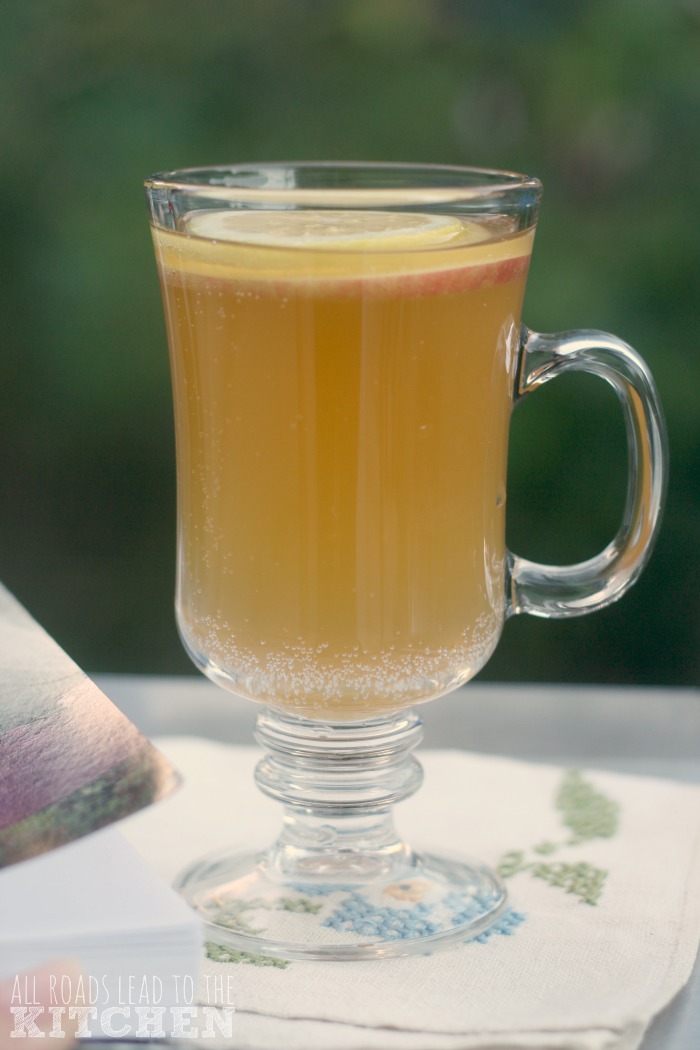
Many of my books have been reviewed, but this is the first one that had a review and a recipe that was inspired by the book! The book is Chaos Comes to Longbourn, which received a great review from Heather at All Roads Lead to the Kitchen. And the recipe is Apple Brandy Punch (doesn’t that sound yummy?).
Heather writes: “This tangled web of mismatched lovers does eventually right itself, but the fun part came in finding out how—a must-read for all Janeites!”
http://www.allroadsleadtothe.kitchen/2016/10/apple-brandy-punch.html
Chaos Comes to Longbourn received a lovely review at the Books for Life Blog!
Blodeuedd wrote, ” What a mess of couples, I will keep on saying it. It made for such a good read! Funny! Well written and quite the tale.”
http://books-forlife.blogspot.com/2016/09/chaos-come-to-longbourn-victoria-kincaid.html
Wow! Awesome five-star review from Margie’s Must Reads for Chaos Comes to Longbourn! Margie writes:
“With four couples perfectly matched with their absolute opposite, made this book very funny and utmost engaging. I think every single character was true to form and written so wonderfully well! I could not stop reading! I could not put this book down!”
 Victoria Kincaid